
 Beginner
6 Pillars of Iman for Kids — Online One-on-One Classes
Many children can recite the six articles of faith by name but cannot explain what a single one of them means. This…
View course
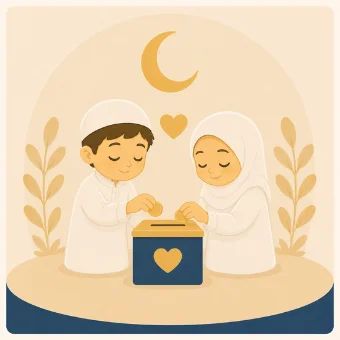
Teach your child the joy of giving the way Islam teaches it. This course introduces charity in Islam for kids in a way your child can understand and live: what Zakat is and why it is the third pillar of Islam, what Sadaqah is and how a smile, a kind word, or sharing a snack can all count, and true stories of giving from the Sunnah.
Lessons are live, one-to-one, and online, with sessions of [X] minutes led by qualified teachers who are native Arabic speakers [and fluent in English]. The course suits children aged [X–X] and ends with a simple giving project your child can do with the family. Generosity is taught gently, with kindness and respect for others and no pressure to give.
 6–9
The Zakat and Sadaqah Course for Kids helps your child understand why Muslims give and how. Your child learns that Zakat is the third pillar of Islam and sees how it works through a simple example, [one coin out of every forty], shared with the people the Quran names as deserving it. They then discover Sadaqah, the voluntary charity anyone can give, from a smile and a kind word to removing harm from the road.
True stories from the Sunnah bring these lessons to life, and the course ends with your child’s own giving project at home, including a sadaqah jar and lessons on Zakat al-Fitr and sadaqah jariyah.
This course gives children a structured introduction to Zakat, Sadaqah, and the broader meaning of giving in Islam. Lessons make important Islamic concepts understandable, memorable, and relevant to a child’s everyday experiences.
Islamic charity for children is taught from the Quran and Sunnah by Al-Azhar graduates who are native Arabic speakers [and fluent in English]. Your child learns real facts, like Zakat being the third pillar, in words they can understand.
Your child learns that sadaqah does not always need money, from a smile to a kind word or a helping hand. Every child can give, whatever they have.
Your child hears true stories of generous Muslims, from Uthman’s well to the mother who shared a single date. Each story teaches a different lesson about giving.
Your child keeps a sadaqah jar and completes a small act of sadaqah each week. Our free jar label and 30-day sadaqah chart make it easy to start.
Giving is taught with joy, never with pressure or guilt. Your child learns to give with kindness and to respect every person they help.
Your child learns about Zakat al-Fitr and how charity in Islam for kids can be part of every season. They can continue with our Ramadan Course for Kids when the month comes.
One free trial class shows you more than a page of promises — bring a passage and leave with real corrections.
Book Free TrialThe course is organised into four modules that move from understanding Zakat and Sadaqah to giving with your own hands. Every lesson includes a story or hadith, a simple explanation, a question for your child, and a weekly sadaqah challenge.
Learn what Zakat is for kids: the third pillar of Islam, and why Allah asks Muslims to share part of their wealth. Understand how it works through a simple example [of one coin out of every forty], and who Zakat helps.
Discover what Sadaqah is for kids: voluntary charity that anyone can give, at any time and in any amount. Learn the Prophet’s ﷺ teaching that a smile, a kind word, and removing harm from the road are all sadaqah.
Hear true stories from the Sunnah, such as Uthman (may Allah be pleased with him) buying a well for the people of Madinah. Learn from the mother who shared one date between her two daughters, and the man who gave water to a thirsty dog.
Put giving into action with a sadaqah jar at home and a small sadaqah to do each week. Learn about Zakat al-Fitr in Ramadan, sadaqah jariyah, and how to give with kindness and respect.
By the end of the course, your child will be able to explain Zakat and Sadaqah in their own words and start a small giving habit at home.
Your child will explain that Zakat is the third pillar of Islam and a duty Allah placed on those who have enough wealth. They will use the example of one coin out of every forty to show how it works.
They will also learn the basic difference between Zakat and voluntary charity, giving them a strong foundation for understanding Zakat explained for kids.
Your child will explain that Zakat has fixed rules, while Sadaqah can be given by anyone, at any time, in any amount. They will give a simple example of each.
They will learn to recognize everyday opportunities to share, help, and show kindness while understanding the meaning behind these actions.
Your child will name simple acts of sadaqah they can do every day, like smiling, saying a kind word, or helping at home. They will understand that every child can give, whatever they have.
They will begin to see giving as more than simply handing over money, understanding how thoughtful acts of kindness can make a positive difference in someone else's life.
Your child will retell stories such as Uthman’s well and the mother who shared a single date. They will explain what each story teaches about giving.
This helps turn giving in Islam for kids from a lesson into a value they can recognize and practice in everyday situations.
Your child will learn to give gently, without showing off or making others feel small. They will understand that the best giving is done for the sake of Allah alone.
This clear distinction gives children a stronger foundation for understanding both Zakat for kids and Sadaqah explained for kids.
Your child will keep a sadaqah jar and complete a small act of sadaqah each week. They will know about Zakat al-Fitr and sadaqah jariyah, and feel the joy of giving for Allah.
The goal is not simply to memorize definitions, but to help children understand why giving matters and how these values can shape their everyday choices.
Book a free one-to-one lesson and let your child plan their first sadaqah.
Real sessions from this course — how tutors explain, listen and correct, one student at a time.
Unscripted words from the people who took the course — recorded after their final class.
Ijazah-holding specialists of the intermediate track — patient correctors, proven teachers.

Quran, Tajweed and Islamic Studies Teacher
View full profile
Quran Teacher | Learning Difficulties Specialist
View full profileThe Prophet ﷺ taught that charity never decreases wealth. Help your child learn to give with an open heart.
Before-and-after journeys from students who started exactly where you are now.
Wherever you are on the path, there is a next step waiting for you.
BeginnerMany children can recite the six articles of faith by name but cannot explain what a single one of them means. This…
View course Beginner
Duha Quran Academy's Angels in Islam Course for Kids teaches belief in angels for kids through age-appropriate lessons, Quranic stories, and guided…
View course Beginner
The Aqeedah Course for Kids at Duha Quran Academy gives your child a clear, structured understanding of Islamic belief — who is…
View courseZakat is the third pillar of Islam: Muslims who have enough wealth share a small part of it every year, about one coin out of every forty, with people in need. Allah names in the Quran who should receive Zakat, such as the poor and the needy, so it reaches the people who need it most.
Sadaqah is voluntary charity that anyone can give, at any time and in any amount, while Zakat is a duty with fixed rules. The Prophet ﷺ taught that even a smile, a kind word, or removing something harmful from the road is sadaqah.
Zakat is mainly a duty on adults who have enough wealth, and scholars differ on whether it is due on money that belongs to a child, so parents usually handle it. Children are encouraged to give sadaqah from what they have, which is what this course helps them practise.
Islamic charity for children includes many acts that need no money, like smiling, helping at home, sharing toys, or giving water to a thirsty animal. Our free 30-day sadaqah chart gives your child a simple idea for every day.
Your child learns what Zakat and Sadaqah are, true stories of giving from the Sunnah, and how to start their own giving project at home. The course is designed for children aged [X–X], with no previous Islamic study needed.
You can request a male or female teacher, or a different teacher at any time, by contacting our support team. You can reschedule a lesson with any time hours’ notice.
Fill in the form — your assigned tutor will contact you within 24 hours to schedule your free trial and level assessment.